

Runners and coaches throw around the term “training load” a lot, assuming everyone knows what they’re talking about. But when you start to dig into the meaning of that term, you end up with what you might call the “tempo run” problem—the term means something different for just about everyone!
In this article, I am beginning a three-part series on how to think about training load. I’m not going to laboriously cover the mathematics of every possible training load metric.
Instead, I want to present a high-level conceptual framework—specifically, my claim is that there are three types of training load that you should consider in training: physiological training load, biomechanical training load, and psychological training load.
Each of these types of training load has various ways of being quantified, and arguably various sub-components as well. The three types of training load also relate to one another in some interesting ways. But before talking about interactions, we need to understand each type of load on its own first.
Our topic today is the first of these three: physiological training load.
In short, physiological training load describes the stimulus experienced by the various biological subsystems of your body that contribute to energetics writ large: so, your bloodstream, your mitochondria, your lactate transport proteins, and even the primary motor cortex of your brain. Proper physiological training load drives improvement: gains in your body’s energetic capabilities that allow you to run faster and further.
See also: Part II - biomechanical training load
The basic concept of physiological training load
Physiological training load is what most people think they’re talking about when they say “training load.” Metrics like training stress score (TSS), training impulse (TRIMP), metabolic equivalents (METs), and various metrics of acute and chronic “training load” (ATL, CTR, acute-to-chronic training load) are all trying to capture something physiological in nature—that’s why they are based on things like heart rate, oxygen consumption, or caloric expenditure.
As an example, exercise physiology studies often match training interventions on total oxygen consumption—something you might naturally as a way of quantifying “how much total metabolic work” someone did. Let’s say you wanted to compare the benefits of low-intensity training versus high-intensity intervals—you might naively compare a protocol like this:
- Group A: 60 minutes at 50% VO2max, 5 days per week
- Group B: 4 x 4 minutes at 100% VO2max, 5 days per week
But there’s an issue with this comparison: using units of total oxygen consumed (and setting VO2max to “1.0 units”), Group A has a “total workload” of 60 × 0.5 × 5 = 150 units of oxygen per week, while Group B only has 4 × 4 × 1.0 × 5 = 80 units of oxygen per week.[1]
If Group A improved, was it because low intensity running is better, or because they just consumed more oxygen in total?
This example illustrates why physiological training load is a useful concept. Suppose you instead adjusted Group A to have an equivalent amount of oxygen consumed per week (e.g. 32 min at 50% VO2max, 5 days per week = 80 units total), now you could say something definitive about the benefits of high-intensity intervals versus low-intensity continuous training with your study.
You could imagine a similar system that matches groups on total caloric expenditure, and you’d get almost the same result (since oxygen consumption scales nearly linearly with caloric consumption).[2]
Mileage naturally controls for energetic expenditure and oxygen consumption
Let’s stay with the same “total workload” interpretation of training load for a moment. How would you best plan your training to capture this total workload idea? The answer is simple: just use mileage.
Mileage works so well to control for total energetic workload because running economy is (nearly) constant as a function of speed. In other words, the amount of energy it takes to run a mile does not depend on how fast you run. The same is true for total oxygen consumption.
Yes, your rate of energy expenditure (your “metabolic power”) goes up when you run faster. But it just so happens that you cover ground faster, in a way that’s almost exactly proportional to how much your metabolic power is going up.
So, when you make a plot of a runner’s energetic cost per mile of running (or per kilometer), you get a curve like this:

This plot, by the way, comes straight from one of the chapters of my new book, Marathon Excellence for Everyone—check it out if you want a deeper dive into the science behind running performance!
Notice how the units on the Y axis of the above plot are literal food calories per mile of running – yes, there is a slight U-shaped curve, but across a wide range of speeds, the change is well under ten percent.[3] The same is true for plotting oxygen consumption per mile:
You can still think of some easy ways to break this relationship—doing lots of trail runs on very steep inclines, for example—but for road and track athletes, mileage is a simple and effective way to measure total physiological training load, in the total-workload sense (total energetic expenditure or total oxygen consumed).[4]
Duration does not control for energy expenditure or oxygen consumption
The fact that mileage does control for total energy expenditure, and total oxygen consumption, also implies that the same is not true for training by duration (e.g. hours of running per week).
In contrast with mileage, training by duration does not account for total workload differences at different intensities. This is a very important point! If you run seven hours per week, your total workload depends on how fast you go. The same is not true if you run 50 miles per week.[5]
Physiological training load should combine volume and intensity, but how?
If you believe, as I do, that the specific physiological effects of training depend on intensity, you would agree that you can’t just add up mileage covered, hour of training, or calories burned and call it the singular authoritative measure of physiological training load.[6]
This finding motivates various training load schemes that apply a weighting factor to different intensities, to give you “more credit” for running 5 km fast versus 5 km easy (or 20 minutes fast versus 20 minutes easy).
This intuition seems directionally correct: if you could only run 30 miles in a week (or 5 hours, or some other constant amount of “absolute load”), it feels like there are better and worse ways of distributing intensity within the week. This intuition gives rise to the many, many different weighted training load schemes like training impulse (TRIMP) and training stress score (TSS), to name just a few.
Some of these weighted training metrics also add a weighted average to different workouts over time, to capture a temporal snapshot of your physiological training load over the last week, month, or six weeks.
From my perspective, though, these temporal schemes address the question of how to aggregate physiological training load, not what physiological training load means—two people could agree on a training load metric, but disagree on the correct aggregation (weekly, monthly, exponential moving average, etc.).
Sometimes it’s better to just consider different intensities differently
The various weighted-intensity approaches are often less helpful than just separating out the physiological training load into different categories.
This approach is one of the virtues of zone training, which implicitly acknowledges that you want to take a multivariate view of training, with different weekly or monthly volume targets in each of several different zones of intensity.
This is the core idea of “training intensity distribution” (TID) models—again, there are many of these, but they share the assumption that different intensities have different effects, even per minute or per mile of running. Even the simple “80/20” rule falls into this category: training volume is put into two different buckets of intensity (high and low).
Renato Canova’s training philosophy takes an even bolder view, breaking down training into many different “zones.” In such an approach, a 5k runner might have separate training load goals at <60%, 65–75%, 90%, 85%, 90%, 95%, 100%, 105%, 110%, and >110% 5k pace!
Physiological training load can be different for different biological systems
One reason I find the Canova approach so useful is that it’s natural to extend it one step further: different intensities not only have different effects on the body, but different systems in the body respond to intensity differently.
Here’s one concrete example: people talk about “mitochondrial function” a lot, but your mitochondrial capabilities are a combination of two different qualities: your mitochondrial density and your mitochondrial respiratory power.
Mitochondrial density is just how much mitochondria you have in a given volume of muscle.[7] If mitochondria are “power engines,” your mitochondrial density tells you “how many engines you have.”
Training increases mitochondrial density, but the effect is completely independent of intensity (as long as you’re below a nominal intensity of 100% VO2max). That’s the conclusion of a meta-analysis of exercise studies totaling over 1,200 people. High-intensity and low-intensity training are equally effective at boosting mitochondrial density once you control for total workload (as in the Group A / Group B example earlier).

As the plot shows, mitochondrial density changes are wholly dependent on training volume, not intensity. Here, mitochondrial density is being estimated by changes in citrate synthase activity (labeled “CS activity”). These studies are on the exercise bike, you can think of “Wmax” as “VO2max” in a running context.
However, the situation is completely reversed with mitochondrial respiratory power—the aerobic power output per gram of mitochondria. If mitochondria are “power engines,” your mitochondrial respiratory power tells you “how powerful each engine is.”
To improve mitochondrial respiratory power, you need intensity: the same meta-analysis found that training above 90% VO2max is critical for improving mitochondrial respiratory power. You get much more effective adaptations, even per amount of workload, from higher-intensity training.
Again, data from the Granata et al. meta-analysis bear this finding out:

These mitochondrial findings help demonstrate that even a weighted physiological training load will fail to correctly capture how all biological systems respond to a given training intervention—you can’t always capture every aspect of the body’s response to training with one singular metric.
Some practical takeaways on how to think about physiological training load
Often in physiology, you dive into a subject and open a can of worms, leaving more confused than when you started. While that may be the case here, there are some helpful takeaways you can apply to your own training from what we’ve learned about physiological training load:
Physiological training load is a useful way to think about overtraining and undertraining
Compressing all the training you do into one number—or even just a hypothetical number, without actually quantifying it—can be a useful heuristic for thinking about the overall physiological stimulus to your body as it relates to “how much” training you are doing globally. If you want a quick, first-pass understanding of a given training approach, calculating a physiological training load metric of some kind is a good way to do it.
For example, if I was asked about a very successful high school cross-country program doing an exotic, unconventional, Mihály Iglói-inspired interval-focused training approach, the first thing I’d do is check out some quick metrics like:
- What’s the total weekly mileage?
- How much of that volume is high-end aerobic running (above LT1, below steady-state max)?
- How much of that volume is within 5% or so of race pace?
(You could imagine doing something very similar with TSS, TRIMP, heart rate zones, etc.).
If it turned out that this team was averaging 75 miles per week, with 25 mi of it at speeds above LT1, that would explain a lot of that team’s success.
Likewise, if I saw a Reddit post by a high schooler planning out summer training under a similar system, but ran these checks and found it would only total 18 miles per week with three miles above LT1, then I’d predict that this runner would not find very much success with this approach, relative to more traditional training—the overall physiological training load is just not high enough.
Overtraining is another situation where physiological training load is the relevant metric: since overtraining is fundamentally a failure of your physiological systems to respond to the stimulus they’re receiving, you want some number (or set of numbers) that quantify the physiological stimulus to get a handle on the situation.[8]
Physiological training load is not a useful way to think about overuse injuries
Injuries are biomechanical, not physiological. Physiological training load—and physiologically based metrics like TRIMP, TSS, etc.—are not the best way to design training to avoid injury.
We’ll go into this problem in much more depth in the article on biomechanical training load, but the core intuition is as follows: weighted physiological training load metrics like TRIMP or TSS give extra “points” to higher intensities, but the weighting scheme is not designed to scale according to the biomechanical forces that your legs are experiencing.
Concretely: running 5 km fast does much more damage to your body than running 5 km slow, even to a greater extent than captured by various physiological weighting schemes. High heart rates don’t cause injuries; high biomechanical loads do.
Now, there’s often a correlation between physiological training load and biomechanical training load, and in practice things like very high mileage and very fast workouts will increase both. But if you are using the exact same framing to think about physiological load and biomechanical load, you’re making a big mistake.
Mileage is a very good physiological training load metric
I think mileage gets a bad rap. It is a very simple measure of physiological training load that has a very powerful property: because running economy is essentially constant across speeds, mileage automatically accounts for changes in energy expenditure at different speeds.
As we saw earlier, if you run 5 km, your total energetic expenditure (in calories) and your total oxygen consumption (in liters) is the same, whether you run 5 km in 18 minutes or 28 minutes.
This property makes mileage a very robust metric for physiological training load—it’s hard to do better as a high-level estimate of your body’s “total workload.”
Consider tracking your volume in different intensity ranges separately
Our mitochondrial density vs. mitochondrial respiratory power example from earlier illustrated why even the most clever intensity-weighting scheme will fail to fully capture your body’s response to a given training stimulus: not all physiological sub-systems respond the same to different intensities.
The best “solution” here is to just track different intensities separately. For all their flaws, “Zone Training” models do this quite naturally, as does Renato Canova-style full spectrum training. Depending on your training goals, you might either focus on your “global” physiological training load (e.g. weekly mileage), or your physiological training load at a particular intensity (e.g. monthly volume at 80–92% 5k pace).
For example, when writing the Marathon Excellence training plans, I tracked weekly mileage and distance covered in each workout at 90, 95, 100, 105, and 110% of marathon pace.
Recap
Physiological training load captures the “dose” received by the various biological systems of your body as a result of training. It is a highly useful conceptual tool, even though there’s no singular metric for physiological training load metric that captures the full picture of your body’s response to training.
If you want a high-level overview of your total workload, just look at your mileage: it correctly accounts for the fact that higher running intensities burn more energy, so you can cleanly separate the effects of total workload versus the effects of higher intensity.
Weighted intensity metrics like training stress score or training impulse can be useful in some cases, but you should also consider analyzing your training volume in several different intensity ranges simultaneously. Taking a “multivariate” view of physiological training load can lead to insights you’d miss when trying to compress training load down to one number.
Learn more about the science of running
If you want to know when my follow-up articles on biomechanical training load and psychological training load come out, sign up for my free email list! You’ll be the first to find out when I have new articles, new apps and calculators, and new projects coming out.
I also have a new book out this month, Marathon Excellence for Everyone, which covers the modern, scientifically based approach to marathon training. You can get it on Amazon or learn more about the book at MarathonExcellence.com.
I also have a shorter book, Modern Training and Physiology for Middle and Long-Distance Runners, that focuses on the science of performance and training for events from 800m to the 10k. Make sure to check them both out!
Footnotes
[1] This is a somewhat contrived example to make the math easy; of course you might more reasonably assign “mixed” training to group B including some intense intervals and some easy exercise. We are also ignoring the fact that doing 3 min at the intensity associated with “100% VO2max” does not actually involve 3 x (your VO2max) units of oxygen, but in practice it is not that hard to account for things like oxygen kinetics, mixed training, etc. The important point is that we want to parse out the effects of the intensity per se from the effects of the overall volume of oxygen consumed.
[2] Technically there is some divergence between oxygen consumption and caloric expenditure as you shift towards burning more carbs and less fat at higher intensities, but at its worst the differences are ~5% or so.
[3] Running is unique in its “flat” economy curve: walking has a very pronounced U-shaped curve, for example, and in cycling, gear ratio and cadence complicate the picture somewhat.
[4] Sometimes I find it helpful to think about training from the perspective of a single muscle cell, or even a single mitochondrial membrane. All you’d really “know” is (1) how fast oxygen is diffusing across your membrane, and (2) how much oxygen you consumed in total. These two experiences map directly to intensity and total workload.
[5] It might be interesting to explore workload differences in runners who have high vs. low running economy. In this case, the runner doing 50 miles per week with very good running economy does have a lower total energetic expenditure (even relative to body mass) than the runner with poor running economy!
[6] You might call the opposite view “training load maximalism”—the view that intensity does not matter, and instead, all that matters is sustaining the highest training load possible, regardless of the intensity. Even though I reject this view, I still think it’s worth taking seriously: a good first-pass analysis of any new or unusual training method is “does this just increase overall training load?”
I’ll write up a full article on training load maximalism at some point, but a good intuitive argument against it comes from considering how triathletes and ultramarathoners fare in shorter distances. If training load is all that matters, why don’t people like Courtney Dauwalter, Gwen Jorgensen, and Alex Yee drop down to shorter events and destroy everyone? They’re very good at shorter running events, to be sure, but typically not the very best.
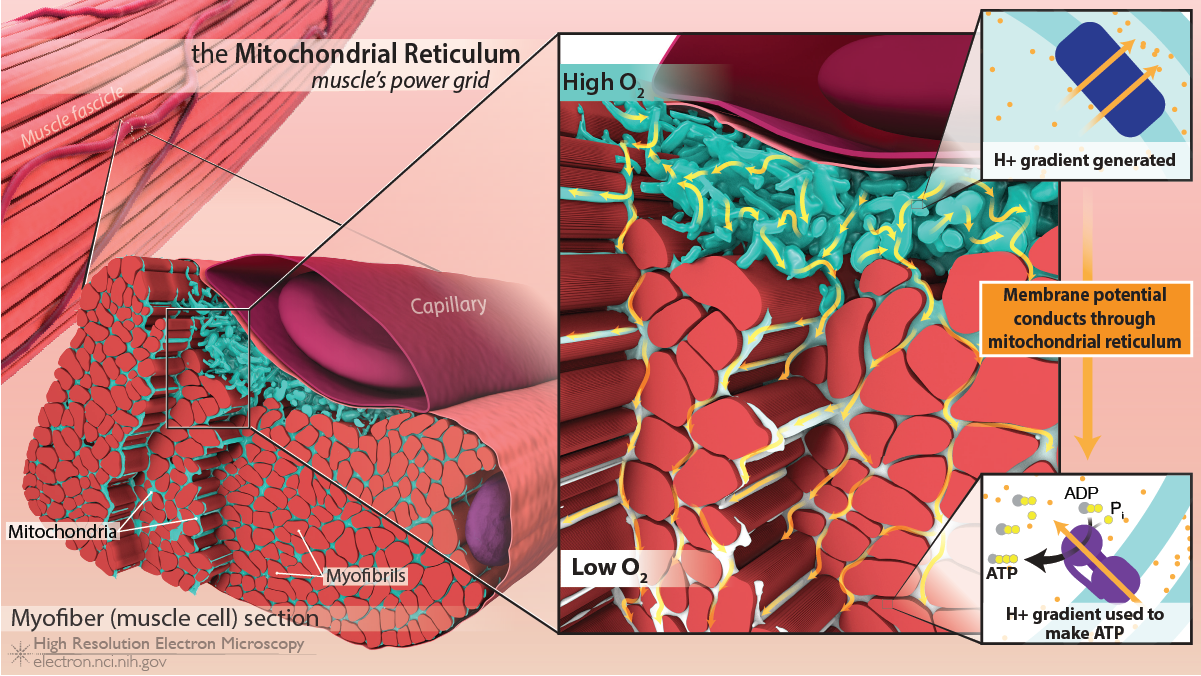
[7] I’m consciously saying “how much” and not “how many” mitochondria, since the college-textbook picture of mitochondria as discrete, individual bean-shaped cells is not correct for muscles: within a muscle, the mitochondria forms a three-dimensional mesh that surrounds muscles and manages electrical potentials and power flow across many different muscle fibrils at once.
[8] Overtraining is a complicated subject; often psychological training load plays a role in overtraining as well. But physiological training load is not a bad place to start: if the physiological load is moderate, and the athlete feels overtrained, that suggests the problem lies outside of the training itself: sleep, life stress, nutrition, post-viral syndrome, etc.
Related articles

New web app: Predicting LT1 pace and Zone 2 pace from 5k time

Designing a plyometrics program for improving bone strength in young runners

Three theories of tissue damage accumulation during running

Lecture: The science behind modern marathon training

What assumptions are baked into your race prediction model?

Tendons do not store energy for free

In windy conditions, running at a constant effort is usually better than running at a constant speed


"in cycling, gear ratio and cadence complicate the picture somewhat" not to mention terrain, headwinds, road surfaces, etc, if you're actually thinking about speed rather than kilojoules. Still, I've been considering lately that it might all even out pretty well when aggregated over a reasonably long (but still useful) timespan, see e.g. https://www.slowtwitch.com/training/slowtwitch-aerobic-points/
Interesting! I have also noticed the approximate 4:1 ratio for swimming to running! Less familiar with cycling but seems somewhat reasonable as well
Hi John,
n the graph for kcal per mile, does it vary depending on the weight of a person? Does a 150lb guy and a 200lb person burn at the same rate?
Also, at long multi-day events like Race Across America, some whacky things happen to runners' energy expenditure between the first and the final day of the race, even though they are covering distance of a marathon per day. As pointed out by Herman Pontzer, some runners show a variation of upto 600 kcal/day. https://www.science.org/doi/10.1126/sciadv.aaw0341
Lastly, the physiological training load by distance ran differs between steady running and that of intermittent sports like soccer. Across many sports, probably the easiest implemented proxy for physiological load is heart rate as a percentage of maximum. As pointed by Martin Buchheit et.al. https://martin-buchheit.net/2025/10/11/revisiting-dose-response-relationships-between-heart-rate-zones-trimps-and-aerobic-related-physiological-and-performance-markers-in-elite-team-sports/
Yes -- usually running economy is normalized by body weight (for example, calories per kg per km, or liters of oxygen per kg per km) for exactly that reason! Definitely agree re: other sports, it gets much more complicated in an intermittent sport like soccer, rugby, etc. In those situations I think heart rate data makes a lot more sense.
Amazing article John, truly appreciate the invaluable content. If I may, however: you stipulate that energy expenditure is very much a function of mileage, irrespective of intensity. Nevertheless, are you still accounting for energy expenditure after exercise? This could also significantly alter the physiological load of running at higher speeds. This is also the reason, imo, why heavy resistance training also entails a significant physiological load, due to the post exercise energy required to repair and augment muscle and connective tissue, not just the energy needed to lift the weight during the actual activity.
A good point - my understanding is that the "afterburn" is not that big, compared with the energetic requirements of the exercise itself. It might be more relevant in, as you point out, heavy resistance training, where the energetic expenditure DURING the activity is pretty low, so a big fraction of the total energy expenditure might come after. The point about regenerating tissue is an interesting one though...stay tuned for the biomechanical load article which will cover that topic!
1. What's the minimum intensity for mitochondrial density training? I don't think walking would do anything for runners.
2. 90% VO2max is above LT2 then Threshold type training is not useful for increase mitochondrial respiratory power?
(1) Some sources quote ~50% VO2max as a "minimum" but meta-analysis from Granata shows clear effects on mitochondrial density even down to 45% VO2max. In practice it's probably more a function of the intensity relative to what you have done before, and how that translates to total workload. For example, if you're Graham Blanks and you do all your running at 6:00/mi, then switch to 10:00/mi, you will almost certainly de-train your mitochondria. But if you have never run before and you start up at 10:00/mi, you will definitely get a big boost.
(2) I would put it as "threshold type training is *not AS useful* for increasing mitochondrial respiratory power, compared with training at 90-100% VO2max" - you do get some benefit, just less benefit per minute of training. This reasoning is why I like including workouts at 95-100% 5k pace even during base training for many kinds of runners.
Hey John can't wait for Part 3. I'm curious if you plan on writing more about overtraining or similar topics one day. I think it's easy to understand that too much biomechanical load can cause injuries, but what are the risks of too much physiological load? Where is the line between working hard and having some fatigue, and overtraining? I'm sure the answer is highly individual, but it would be great to get more insight into why our bodies stop responding to stimulus.
Thanks! Yes I would love to dive into the overtraining side of things -- my short answer is that "classical" overtraining is actually quite rare among runners, given that cyclists and swimmers (even relatively amateur ones) can put in massively bigger physiological loads without overtraining. So more often when people feel "overtrained" the culprit is not the training per se, but low energy availability / low carb availability / RED-S, lack of sleep, or post-viral syndrome. Not ALWAYS though!
Hey John, thank you for the article and overview of physiology. The mitochondrial respiratory power graph caught my eye, specifically the part about 90% VO2. For all of the studies with higher percent-change of respiration, the subjects were barely trained, ranging from completely sedentary to maximum 3 hrs/week for the 6 months preceding the study period. I'm wondering how would the graph change if these studies only captured trained individuals. In your experience, how do trained athletes respond to 90%+ VO2 work done on a weekly or bi-weekly basis? I'm mainly training for distances from 1500 to 5000, and curious if I should incorporate CV-style (88-92% VO2) training year round for base training? Normally during these I'm measuring 5-6 mmol/L, and my LT is around low 4s. I do notice higher fatigue levels the next day after classic CV work like 5 x 1600 w/ 2-3' off, than if I do something like 5 x 6' w/ 1' off at lower lactate levels (say 3.0-3.5 mmol/L range).
Thank you for your time!